
Leave Your Message
-
Phone
-
Wechat

-
Whatsapp
-
E-mail
-
Alibaba
The correction tape industry in South Africa has experienced steady growth driven by the expanding educational, commercial, and creative sectors. As literacy rates improve and demand for stationery products rises, correction tapes remain an essential tool in everyday writing, editing, and office tasks across schools, universities, government offices, and private businesses.
South Africa's stationery market is evolving with an increasing focus on ergonomic design, environmentally friendly materials, and refillable products, aligning with global trends toward sustainability. Manufacturers and exporters supplying big correction tape to South Africa are adapting by offering high-quality, durable, and user-friendly correction tapes to meet diverse customer needs.
With the rise of remote working and digital education, traditional stationery products like correction tapes continue to play a significant role as complementary tools for note-taking and document markup. In the local context, correction tapes are widely used in schools for error correction, administrative paperwork, creative arts, and even labeling applications.
As industry standards improve, South African businesses are increasingly partnering with global suppliers who provide advanced correction tape solutions featuring smooth application, minimal tape waste, and quick-drying adhesive. This has led to greater product innovation and competitive pricing in the marketplace.
Founded in 1996, Guangdong Lepusheng Stationery Co., Ltd is a leading manufacturer and designer specializing in stationery products including correction tape, adhesives, writing instruments, and art supplies. With over 400 patents and an industrial plant exceeding 20,000 square meters, the company utilizes advanced technologies and innovative design to serve clients worldwide, including South Africa.
Committed to high quality, affordable pricing, and sustainability, Lepusheng emphasizes research and development, incorporating client feedback and market trends to deliver tailored stationery solutions for diverse customer segments. Their ODM and OEM capabilities empower South African distributors and retailers to offer customized correction tape products aligned with local preferences and industry standards.
Our advanced IT system and streamlined coordination between departments ensure efficient, high-quality manufacturing processes that meet the demands of the South African market with precision and reliability.
With a focus on research and product development, we continuously bring innovative correction tape designs featuring smooth application and refillable mechanisms, supporting sustainable and creative stationery use in South Africa.
We offer customized ODM and OEM services, providing South African clients with smart solutions that balance cost-efficiency, functionality, and appealing product designs tailored to local market demands.
Our internationally recognized quality management systems and certifications ensure our correction tapes meet global standards, reassuring South African partners of product excellence and reliability.
In South Africa, big correction tapes are indispensable across multiple sectors—from educational environments to corporate offices, government departments, and creative industries. They facilitate clean, instant error correction on paper, supporting writing clarity and professional presentation.
The education sector remains the largest consumer segment. Learners and teachers rely on correction tapes for assignments, examinations, and administrative paperwork. Simultaneously, businesses use these products in bookkeeping, official documents, labeling, and design editing.
Looking forward, innovation will shape this market further. Eco-friendly correction tapes utilizing biodegradable materials and refillable cartridges are gaining preference. Integration of ergonomic designs to reduce strain during repetitive use is becoming common, along with enhanced adhesive technology to prevent residue and ensure smooth application.
Digital transformation has not rendered such stationery obsolete; rather, hybrid workflows demand that physical correction tools coexist efficiently with digital counterparts. Coupled with South Africa’s rising literacy and back-to-school demands, suppliers and manufacturers have a promising outlook as they address growing consumer sophistication combined with price sensitivity.
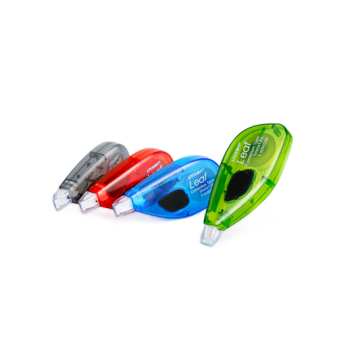 LPS OEM T-90258 Correction Tape 5mm*12m Side Application
 LPS OEM T-956 Correction Tape Roller 5mm*8m Regular Design
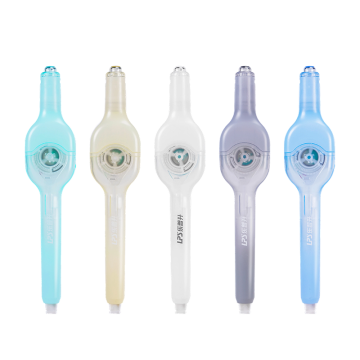 LPS ODM & OEM T-9290 Correction Tape 5mm*6m Retractable Pen Style & Refillable
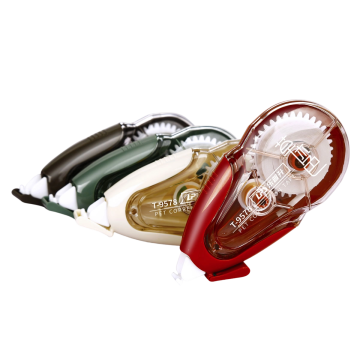 LPS OEM Correction Roller T-9238 12m Regular Design School & Office Supplies
 LPS ODM & OEM W241 Glue Tape 6mm*6m Dot Glue & Retractable & Refillable
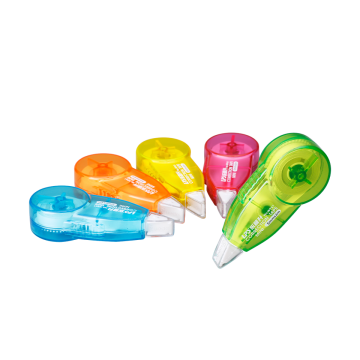 LPS OEM T-961 Mini Correction Tape Roller 5mm*6m for School Supplies
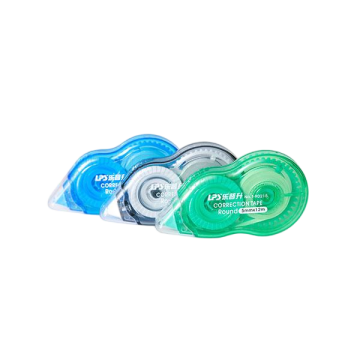 LPS OEM T-90215 5mm*12m Correction Tape Regular Design
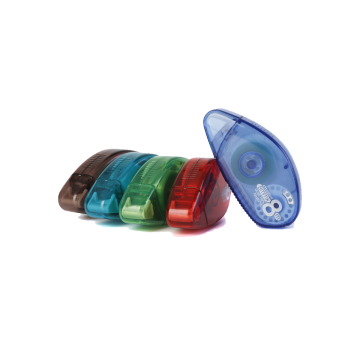 LPS OEM 214 Double-sided Adhesive Glue Tape 8mm*8m Transparent Dot-line Glue